Changi
Plucked Instruments
Asia, Central Asia
Medieval to Pre-Modern (1001–1900)
Overview
The changi is a traditional Georgian harp most closely associated with the mountainous region of Svaneti in northwestern Georgia. Small in size but culturally significant, it is one of the few surviving indigenous harp traditions in the Caucasus. The changi is typically used to accompany polyphonic singing, epic recitations, and lyrical songs, where it provides harmonic support and a gently resonant foundation.
Unlike large concert harps of the Western orchestral tradition, the changi is a modest folk instrument, historically built by local craftsmen and integrated into village musical life. Its construction and tuning reflect regional aesthetics rather than standardized concert design.
Classification
- Instrument family: Chordophone
- Sub-family: Harp (open harp)
- Hornbostel–Sachs: 322.11 (arched harp)
- Strings: Traditionally 6 to 9
- Playing method: Plucked with fingers
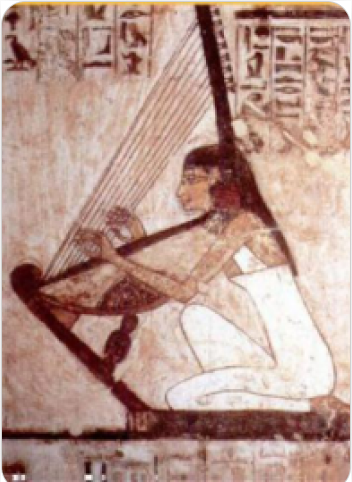
Organologically, the changi belongs to the family of arched harps, meaning that the neck curves away from the resonator without a pillar connecting the two. This distinguishes it from frame harps and from the large pedal harps of European classical music.
Historical Background
The changi is considered one of the oldest traditional instruments of Georgia. While precise historical dating is difficult due to the predominance of oral transmission, iconographic and ethnographic evidence suggests that small arched harps have existed in the Caucasus for centuries.
In Svaneti, the instrument held an important place in local ritual and social practice. It was used in domestic gatherings, epic storytelling, and occasionally in lament traditions. Over time, as musical life changed and instruments such as the Ch’uniri became more prominent in certain contexts, the changi’s use declined, but it has remained an emblem of regional identity.
Structure and Organology
Body and Resonator
The changi typically consists of a hollow wooden resonator carved from a single block of wood. The body may be boat-shaped or slightly trapezoidal, depending on regional style and maker. A thin wooden soundboard is attached to the resonator, allowing the instrument to project its sound.
The resonator is relatively small, reflecting the intimate performance settings in which the instrument was traditionally used.
Neck
The neck curves outward from the resonator in an arched form. Strings are attached along the neck and descend to the soundboard. Because the changi lacks a vertical pillar, tension is limited compared to larger frame harps, resulting in a softer and more delicate tone.
Strings
Traditional changi instruments typically have between 6 and 9 strings, though the exact number can vary. Historically, strings may have been made from gut or other natural fibers. Modern reconstructions and contemporary instruments often use nylon or synthetic materials for greater durability and tuning stability.
The strings are tuned diatonically and are not equipped with mechanical levers or pedals. This limits chromatic flexibility but supports modal accompaniment suited to Georgian vocal traditions.
Tuning and Range
The changi is tuned according to the vocal repertoire it accompanies. Because Georgian polyphonic singing often relies on modal structures and drone relationships rather than functional harmonic progressions in the Western sense, the changi’s tuning emphasizes stable interval relationships.
Its range is modest, generally spanning just over an octave depending on the number of strings. The instrument’s purpose is not wide melodic display but harmonic grounding and resonance.
Playing Technique
The changi is played seated, with the instrument resting against the body or on the lap. The player plucks the strings with the fingers of both hands. Unlike the Western concert harp, there is no standardized fingering system; technique varies according to local tradition and personal style.
Because of its limited string count and diatonic tuning, the changi often provides:
- Drone accompaniment
- Broken chord patterns
- Simple melodic reinforcement
The overall effect is gentle and supportive, blending into the vocal texture rather than dominating it.
Musical Role and Cultural Context
The changi is closely linked with the musical culture of Svaneti. In traditional settings, it accompanied:
- Epic and historical songs
- Lyric folk songs
- Domestic gatherings and storytelling
It may appear alongside other Georgian instruments such as the Ch’uniri and the salamuri, though it is often used independently as a self-contained accompaniment instrument.
In contemporary Georgia, the changi is also presented in staged folk ensembles and cultural preservation contexts, where it represents continuity with regional heritage.
Construction Materials
Traditional changi construction uses locally available woods, selected for resonance and workability. Typical materials include:
- Resonator and neck: Carved hardwood
- Soundboard: Thin wooden plate
- Strings: Historically gut or fiber, now often nylon
Because the instrument lacks heavy tension and mechanical complexity, craftsmanship emphasizes proportion, balance, and acoustic response rather than structural reinforcement.
Maintenance and Care
The changi should be stored in a stable environment, protected from excessive humidity and temperature fluctuation. Wooden components may expand or contract with climate changes, which can affect tuning stability.
Strings should be checked periodically for wear, and tuning pegs may require occasional adjustment to maintain proper friction. Since the instrument is lightly built, careful handling is essential to prevent structural damage.
FAQ
FAQs
What is the changi?
The changi is a traditional Georgian arched harp, most closely associated with the mountainous region of Svaneti, and used primarily to accompany polyphonic singing and folk songs.
How many strings does a changi have?
A traditional changi typically has between six and nine strings, tuned diatonically to support regional vocal repertoire.
How is the changi different from a Western harp?
The changi is a small arched harp without a pillar or pedal mechanism, and it has far fewer strings than a Western concert harp. It is designed for modal folk accompaniment rather than large-scale chromatic repertoire.
Where is the changi traditionally played?
It is traditionally played in the Svaneti region of Georgia, particularly in domestic gatherings and in accompaniment to local polyphonic singing traditions.
Other Instrument
Categories