Video
The mago is a traditional aerophone instrument originating from the Indigenous cultures of northern Australia, specifically associated with the western regions of Arnhem Land. As a variation of the didgeridoo, the mago shares core acoustic principles but exhibits distinct cultural and structural characteristics tied to its regional use. Like its counterpart, the mago produces sound through the vibration of the player’s lips, creating a resonant drone amplified by the instrument’s tubular structure. However, the mago’s design and application are uniquely adapted to the musical traditions of the communities that craft and play it. The instrument is typically cylindrical or slightly conical, constructed from naturally hollowed hardwood, and often shorter than standard didgeridoos to suit specific vocal accompaniments. Its role in ceremonial and storytelling practices underscores its cultural significance, serving as both a musical tool and a vessel for preserving ancestral narratives.
Type of Instrument
The mago is classified as an end-blown tubular aerophone under the Hornbostel-Sachs system, specifically falling into category 423.121.11 (natural trumpets without mouthpieces). This classification aligns it with the didgeridoo family, though regional naming conventions and structural nuances differentiate it from other variants like the yiḏaki or mako. As a wind instrument, the mago relies entirely on the player’s embouchure and respiratory control to generate sound, distinguishing it from free aerophones like sirens or whips, which operate without enclosed air columns. Its design emphasizes acoustic resonance through natural materials, contrasting with modern brass or woodwind instruments that incorporate mechanical components.
History
The mago’s origins trace back over a millennium within the Indigenous communities of northern Australia, particularly among the Bininj Kunwok-speaking peoples of West Arnhem Land. As a cultural artifact, it embodies the symbiotic relationship between Indigenous Australians and their environment, with termite-hollowed eucalyptus trees serving as both material and muse. Historical records from early European contact in the 18th and 19th centuries document the didgeridoo family’s prominence in ceremonial contexts, though specific references to the mago remain sparse due to regional dialectal variations and oral transmission practices. The instrument’s preservation through generations highlights its role in maintaining cultural continuity amidst colonial disruptions.
Archaeological evidence suggests that aerophones similar to the mago have existed in Australia for at least 1,000 years, with rock art depictions in Arnhem Land illustrating their use in rituals. The mago’s evolution is intertwined with the songlines—a complex network of oral histories that map geographical and spiritual landscapes. These narratives, passed down through performance, position the mago as an auditory conduit for ancestral knowledge. Unlike the yiḏaki of northeast Arnhem Land, which gained global recognition, the mago remains relatively localized, reflecting the cultural specificity of West Arnhem communities. Its endurance into the 21st century underscores its adaptability, as contemporary makers balance traditional methods with modern tools to meet evolving artistic demands.
Construction and Physical Structure
Traditional mago construction begins with the selection of a suitable eucalyptus tree, typically one hollowed by termites to create a natural resonator. Artisans identify these trees through a combination of ecological knowledge and acoustic testing, tapping the trunk to assess resonance quality. Once felled, the wood is stripped of bark and smoothed, with the hollow interior occasionally adjusted to refine tonal characteristics. The resulting instrument ranges from 1 to 2 meters in length, shorter than many didgeridoos, to facilitate higher-pitched drones that complement vocal ranges in regional song styles.
The mago’s mouthpiece is often reinforced with beeswax, molded to fit the player’s lips and enhance airflow efficiency. Unlike manufactured aerophones, each mago possesses unique dimensional irregularities—taper, wall thickness, and bore texture—that influence its acoustic signature. These natural variations ensure no two instruments produce identical sounds, embedding individuality into their cultural use. Modern adaptations sometimes incorporate synthetic materials or decorative elements, though purists prioritize organic construction to maintain acoustic authenticity. The instrument’s physical structure directly impacts playability: narrower bores require greater breath pressure but yield brighter tones, while wider bores facilitate deeper drones at the expense of harmonic complexity.
Types and Variations
While the mago itself represents a regional variant of the didgeridoo, subtle distinctions emerge based on community-specific practices. For example, ceremonial magos may feature ritualistic carvings or ochre paintings that denote clan affiliations, whereas those used for teaching purposes prioritize ergonomic simplicity. Instrument length also varies: shorter magos (1–1.5 meters) dominate in fast-paced song genres, while longer versions (1.5–2 meters) accompany slower, meditative pieces. Hybrid designs, blending attributes of the mago and yiḏaki, have emerged in collaborative cultural exchanges, though these remain rare due to the importance of maintaining distinct regional identities. The classification of aerophones within the mago’s cultural framework extends beyond physical form, encompassing functional categories. Ritual magos, often considered sacred, are restricted to initiated individuals and feature in ceremonies like the Kunabibi—a regional initiation rite. Secular magos, used in social gatherings or educational contexts, lack these restrictions and may incorporate non-traditional materials like PVC for durability. Despite these variations, all magos adhere to the core principle of acoustic resonance through natural materials, distinguishing them from mass-produced imitations that prioritize consistency over cultural authenticity.
Characteristics
The mago’s sonic identity is defined by its interplay of drone, vocalizations, and environmental mimicry. The fundamental drone, typically pitched between A2 and G3, serves as a canvas for overtone manipulation, achieved through tongue and cheek movements that alter the vocal tract’s resonance. Players integrate vocal effects—such as growls, clicks, and animal calls—to create polyphonic textures, a technique rooted in the emulation of ancestral spirits and local fauna. This layered soundscape enables solo performers to evoke complex narratives, blurring the line between music and oral storytelling.
Acoustically, the mago’s non-harmonic resonances challenge Western musical paradigms, as its natural construction defies standardized tuning. The irregular bore produces formants that emphasize specific frequency bands, creating a “vocal” quality absent in cylindrical instruments. Circular breathing mastery allows for seamless transitions between inhalation and exhalation phases, enabling uninterrupted performance during lengthy ceremonial segments. Culturally, the mago’s characteristics reflect ecological interdependence: its materials, construction methods, and sonic palette all derive from the Arnhem Land environment, making it an auditory symbol of Indigenous stewardship and resilience.
Cultural and Contemporary Significance
The mago remains a vital component of West Arnhem Land’s cultural heritage, bridging ancestral traditions with modern artistic expressions. Its use in contemporary Indigenous music, often fused with genres like rock or electronic, demonstrates its adaptability while raising questions about cultural appropriation and authenticity. Educational initiatives led by Indigenous elders aim to preserve mago craftsmanship and playing techniques, ensuring intergenerational knowledge transfer. Internationally, the instrument’s distinctive sound has attracted cross-cultural collaborations, though practitioners emphasize respecting its sacred contexts.
As global interest in Indigenous Australian culture grows, the mago faces both opportunities and challenges. Commercial demand risks commodifying its cultural significance, yet increased visibility also fosters appreciation for Indigenous ingenuity. Innovations in sustainable harvesting—such as using invasive tree species—address ecological concerns without compromising traditional methods. Ultimately, the mago’s enduring legacy lies in its ability to harmonize ancient acoustic principles with the evolving narratives of its people, resonating as both an instrument and a testament to cultural survival.
Playing Techniques and Sound Modifications
Playing the Mago involves a range of techniques that influence its sound output. Common methods include plucking, striking, or blowing into the instrument, depending on its specific type. For string-based Magos, players often use fingerpicking or strumming techniques to produce melodic lines and rhythms. Wind Magos require controlled breath or lip vibrations to generate sound, with variations in airflow and embouchure affecting tone quality. Sound modifications can be achieved through the use of different materials for the resonator, altering the tension of strings, or applying vibrato and glissando techniques. These modifications allow performers to create a variety of tonal effects, from deep, resonant drones to bright, lively melodies. Advanced players may also experiment with muting or damping to control sustain and dynamics, adding expressive depth to their performances.
Famous Compositions and Most Influential Players
Throughout history, several compositions have elevated the Mago’s prominence in traditional music. These works often feature intricate melodies and rhythmic patterns that showcase the instrument’s versatility. Notable compositions include traditional folk tunes passed down through generations, as well as contemporary pieces composed for cultural festivals and concerts. Influential players have contributed significantly to the instrument’s evolution, with renowned musicians pioneering new techniques and expanding its expressive capacity. These players often perform in national and international festivals, bringing the Mago to a broader audience. Their recordings and live performances serve as benchmarks for aspiring musicians and help preserve the instrument’s cultural heritage.
Historical Performances or Concerts
Historically, the Mago has been featured in numerous performances that highlight its cultural importance. Traditional ceremonies often include solo or ensemble performances where the instrument plays a central role in storytelling and ritualistic practices. In the 20th and 21st centuries, the Mago has been incorporated into modern concert settings, sometimes fused with other musical genres to create innovative sounds. Major festivals and cultural events in regions like India, Bangladesh, and Nepal have hosted performances that showcase the instrument’s rich history. These concerts serve as platforms for both preserving traditional music and exploring contemporary interpretations, ensuring the Mago remains relevant in evolving musical landscapes.
Maintenance and Care
Maintaining the Mago requires careful attention to its materials and construction. Regular cleaning of the resonator and strings or wind channels helps prevent dust and moisture buildup that can impair sound quality. Wooden and bamboo parts should be kept in a dry, climate-controlled environment to prevent warping or cracking. Stringed Magos need periodic tuning, similar to other string instruments, to maintain pitch accuracy. For wind Magos, ensuring the mouthpiece and air channels are free of debris is essential for consistent performance. Repairing minor damages, such as cracks or loose fittings, should be performed by skilled artisans familiar with traditional craftsmanship. Proper storage, avoiding exposure to extreme temperatures and humidity, extends the instrument’s lifespan and preserves its tonal qualities.
Interesting Facts and Cultural Significance
The Mago is more than just a musical instrument; it embodies cultural identity and spiritual symbolism within many communities. In some regions, it is believed to possess spiritual powers, capable of invoking blessings or warding off evil spirits during rituals. The instrument often features decorative carvings or paintings that depict mythological stories, ancestral symbols, or natural motifs, reflecting the community’s artistic traditions. Its role in storytelling and dance underscores its importance in preserving oral histories and cultural narratives.
The Mago’s sound is considered to have healing properties, and performances are sometimes part of healing ceremonies or festivals dedicated to deities. Its continued use and craftsmanship represent a link between past and present, maintaining cultural continuity amid modern influences.
FAQ
What is the history of the Mago musical instrument?
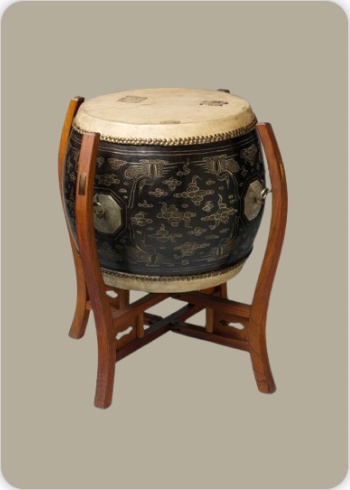
The Mago is a traditional Korean drum that dates back to ancient times. It was historically used in court and ritual music. The instrument symbolizes order and harmony in royal ceremonies. Its use has been preserved in Korean classical performances.
What materials are used to construct the Mago drum?
The Mago drum is typically made from a wooden body with animal hide stretched over both ends. The body is often crafted from quality hardwood like paulownia. The drumheads are secured with ropes or pegs. Traditional craftsmanship ensures its authentic sound.
In what types of music is the Mago commonly used?
The Mago is primarily used in Korean court music, especially during Confucian rituals. It accompanies other traditional instruments in ensemble performances. The drum helps maintain rhythm and structure. It is also featured in reenactments of royal processions.
 Links
References
Other Instrument
Categories