

Video
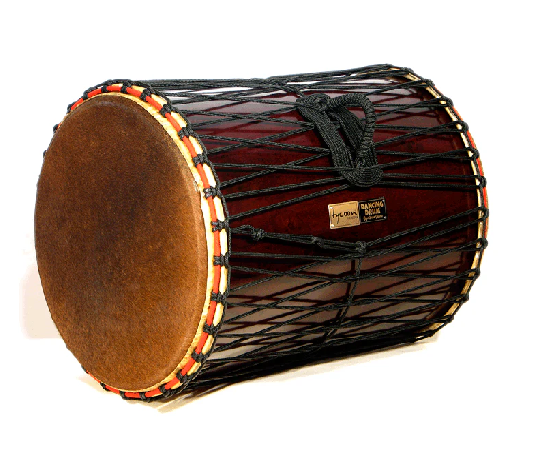
The Sangban is a traditional West African drum that forms an integral part of the dunun family, which includes the kenkeni and dundunba. Recognized for its medium size, the Sangban typically measures between 50 to 60 cm (20 to 24 inches) in length and 30 to 40 cm (12 to 16 inches) in diameter. It is characterized by its cylindrical shape, crafted from wood, and is covered on both ends with animal skin, usually from goats or cows. The Sangban produces a rich, resonant sound that complements the other drums in the ensemble, making it essential for creating complex rhythmic patterns in various musical contexts.
Type of Instrument
The Sangban is classified as a membranophone, which means it generates sound primarily through the vibration of its drumheads. Specifically, it falls under the Hornbostel-Sachs classification of directly struck membranophones (211.212.1). This classification highlights its role as a percussion instrument that relies on the tension and material of its membranes to produce sound. The Sangban’s unique construction allows it to produce both melodic and rhythmic elements within a musical ensemble.
History
The Sangban has its roots in West Africa, where it emerged as a vital instrument within the musical traditions of the Mandé people. The history of the Sangban dates back several centuries, possibly to the time of the Mali Empire in the 13th century. During this period, music and oral storytelling played an essential role in preserving history, culture, and values. Drumming, in particular, was a highly respected art form, and the Sangban was integral to many aspects of community life.
The Mandé griots, or traditional storytellers and musicians, often used drums like the Sangban to accompany their narratives. These instruments were not only tools of entertainment but also served as a means of communication and a bridge to the spiritual world. Over time, the Sangban became deeply embedded in ceremonies, including weddings, funerals, harvest festivals, and initiation rites. Its rhythms often symbolized important messages, guiding dancers and participants through the various stages of an event.
Today, the Sangban continues to hold a prominent place in West African music and has gained global recognition as part of the traditional djembe ensemble. As interest in African drumming has spread worldwide, the Sangban has become a staple in percussion circles, celebrated for its rich, resonant tone and its ability to anchor complex rhythmic patterns.
Construction
The construction of a Sangban involves skilled craftsmanship that emphasizes both functionality and aesthetics. Typically made from hardwood for durability, the body of the drum is cylindrical and hollowed out to create a resonant chamber. The drumheads are crafted from animal skin, which is stretched over both ends of the drum and secured using ropes or metal rings. This setup allows for tuning adjustments by tightening or loosening the ropes.The size and shape of the Sangban contribute significantly to its sound quality. A well-constructed Sangban produces deep bass tones as well as higher-pitched sounds when struck with mallets. The choice of materials—wood for the body and animal skin for the heads—also plays a crucial role in determining the overall tonal characteristics of the instrument.
Types
Within the dunun family, there are three primary types of drums:
Dundunba: The largest drum with a lower pitch, typically measuring 60 to 70 cm (24 to 28 inches) in length.
Sangban: The medium-sized drum that produces a higher pitch than the dundunba.
Kenkeni: The smallest drum in this family with the highest pitch, measuring 45 to 50 cm (18 to 20 inches) in length.
Each type serves a unique function within an ensemble setting, contributing different tonal qualities and rhythmic patterns that enhance overall musical performances.
Features
The Sangban is distinguished by several notable features that set it apart from other drums. Its deep, resonant tone is its most defining characteristic, making it an essential bass instrument in West African drumming ensembles. The addition of the metal bell enhances its rhythmic versatility, allowing the player to combine drum and bell patterns for a richer, more layered sound.
The Sangban’s medium size and weight make it relatively portable compared to larger bass drums like the Dundun. This portability allows it to be used in a variety of settings, from outdoor festivals to intimate gatherings. The drum’s rope-tuning system provides flexibility in pitch adjustment, enabling it to complement other instruments in an ensemble effectively. The craftsmanship involved in creating a Sangban is also a testament to the cultural heritage of its makers, with intricate carvings and decorations often adorning the drum’s wooden body.
Sound Production
The sound production on the Sangban occurs when players strike its heads with mallets or sticks. The tension of the drumheads influences pitch; tighter skins yield higher notes while looser skins produce lower tones. The interplay between different dununs creates a rich auditory experience characterized by complex rhythmic patterns.Players can employ various techniques to enhance sound production:
Striking Techniques: Using different mallets allows players to create contrasting tones; heavier mallets produce deeper sounds while lighter sticks yield sharper accents.
Dampening Techniques: Players can control resonance by dampening specific areas of the drumhead with their hands or fingers.
Rhythmic Patterns: Musicians often develop intricate rhythms through rapid strikes and varied pressure on both heads.
These techniques enable performers to create dynamic musical expressions that resonate with audiences.
Playing Methods
The Sangban is traditionally played with a single wooden stick or mallet in one hand, while the other hand strikes the attached metal bell. This dual-playing technique requires coordination and precision, as the player must maintain steady drumbeats while interweaving complementary bell rhythms. The drum is typically played while standing, with the instrument suspended on a strap worn over the shoulder or around the waist. This setup allows the player to move freely, making the Sangban well-suited for dance-oriented performances.
The playing technique emphasizes striking different parts of the drumhead to produce varied tones. For instance, hitting the center of the drumhead produces a deep, resonant bass tone, while striking closer to the edges creates higher, sharper tones. Skilled players can manipulate the drumhead’s tension ropes during performance to achieve subtle pitch variations, adding an expressive dimension to their rhythms.
Roles in Music
The Sangban serves multiple roles in traditional West African music, acting as both a rhythmic anchor and a melodic contributor. In a typical djembe ensemble, the Sangban occupies the middle tonal range, providing a steady rhythmic foundation that bridges the higher-pitched Kenkeni and the lower-pitched Dundun. Its rhythms are often the most prominent in an ensemble, serving as a reference point for both musicians and dancers. Beyond its role in ensembles, the Sangban is deeply connected to cultural and ceremonial practices. It is frequently used in rituals and celebrations, where its powerful rhythms guide participants through the various stages of an event. For example, in initiation ceremonies, the Sangban’s rhythms symbolize key transitions and milestones, reinforcing the spiritual and communal aspects of the occasion.
In modern contexts, the Sangban has found its way into a variety of musical genres, including world music, jazz, and fusion. Its versatility and rich tonal quality make it a valuable addition to contemporary percussion setups, where it continues to captivate audiences with its timeless rhythms.
FAQ
What kind of sound does the Sangban produce?
The Sangban produces a deep, resonant tone with a rich and steady bass sound. It is played using a stick and sometimes combined with hand techniques to create rhythmic variations. Its tone is distinct and balanced, providing a foundation in drum ensembles. The pitch can vary depending on the tension of the drumhead.
What are the main uses of the Sangban musical instrument?
The Sangban is primarily used in West African drum ensembles to provide rhythm and structure. It often accompanies djembe and kenkeni drums in traditional ceremonies, dances, and performances. It plays a key role in communicating cues for dancers and musicians. Additionally, it supports storytelling and communal celebrations.
What are the different types of Sangban drums?
The Sangban is generally a singular type of drum but varies slightly in size, design, and tuning across regions. It is part of the dundun family, alongside the kenkeni and dundunba. Regional variations may have slight differences in shape or material but maintain a similar sound profile. It serves as the mid-tone drum in ensembles.
 Links
References
Other Instrument
Categories



















