Tar
Plucked Instruments
Asia, Middle East
Early Medieval (0–1000 CE)
Maqam Music Instruments
Video
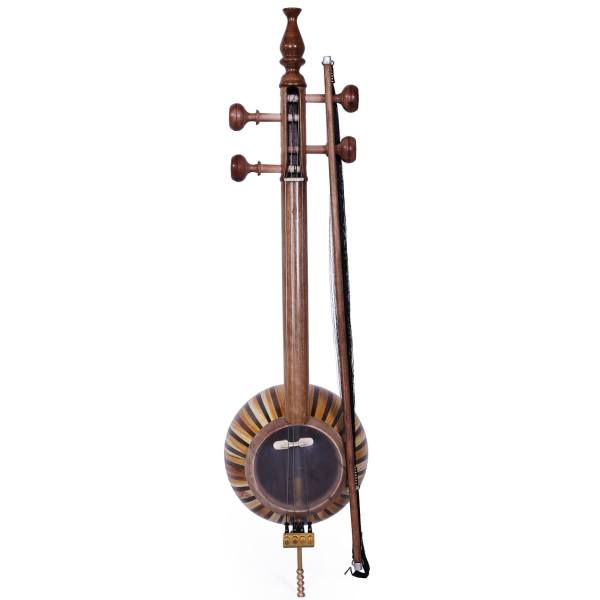
The tar is a distinguished and iconic string instrument, renowned for its unique sound and deep cultural roots across the Middle East, Central Asia, and the Caucasus. Its name, derived from the Persian word for “string,” encapsulates its essential nature as a plucked lute. Visually, the tar is instantly recognizable by its waisted, double-bowl body, which is carved from mulberry wood and covered with a thin membrane—traditionally lambskin or, in some regional variants, the pericardium of an ox. The instrument’s long, slender neck is fitted with movable gut frets, and it culminates in an elaborate pegbox adorned with wooden tuning pegs. The tar’s construction and form have evolved over centuries, resulting in several regional variants, each with its own distinctive features and playing techniques.
Type of Instrument
The tar is a plucked string instrument, specifically a member of the long-necked lute family. This classification places it alongside other lutes, such as the oud, saz, and rubab, but the tar is distinguished by its double-bowl body and membrane-covered soundboard. Its design allows for a broad range of tonal possibilities, from delicate, lyrical passages to powerful, resonant chords. The tar’s strings are typically made of metal, and the instrument is equipped with movable frets, which enable the performer to play microtonal intervals characteristic of Middle Eastern and Central Asian music.
History of the Tar
The origins of the tar can be traced back to ancient Persia, with its lineage extending to the tanbur of Sāsānian Iran. Over the centuries, the instrument spread across the Iranian plateau, the Caucasus, and Central Asia, adapting to local musical traditions and evolving in form and function. The tar’s history is closely intertwined with the cultural and artistic developments of the regions in which it is found, reflecting a rich tapestry of influences and innovations. The earliest references to the tar date back to the medieval period, with the instrument achieving widespread popularity in the 14th and 15th centuries. During this time, various modifications were introduced, resulting in regional variants such as the Persian tar, Azerbaijani tar, and others found in Uzbekistan, Armenia, Georgia, Tajikistan, and Turkey. The instrument’s name, which originally signified the number of strings (e.g., chartar for four strings), reflects a broader practice in Persian-speaking areas of distinguishing lutes based on their string count. However, as the instrument evolved, this nomenclature became less strictly adhered to, with modern versions often featuring more strings than their historical counterparts.
The modern Persian tar underwent significant revision in the 18th century, resulting in the instrument’s current sound range and structural features. This period of innovation solidified the tar’s status as one of the most important musical instruments in Iran and the Caucasus. In Azerbaijan, the tar was further developed in the late 19th century by the musician Sadigjan, who expanded the instrument’s range and versatility by increasing the number of strings to eleven and refining its construction. These advancements made the tar more compact and easier to play, allowing musicians to perform standing and facilitating greater technical and expressive possibilities. Throughout its history, the tar has played a central role in the musical life of the regions where it is found. It has been used to perform a wide range of musical genres, from classical and folk to contemporary and experimental. The instrument’s melodies were historically believed to possess therapeutic properties, with traditional music therapy practices attributing healing effects to the tar’s sound. Its solemn and contemplative melodies were thought to induce relaxation, alleviate headaches and insomnia, and promote a philosophical mood.
Today, the tar remains a symbol of cultural identity and artistic excellence in countries such as Iran and Azerbaijan. It is celebrated in visual art, literature, and currency, with depictions of the instrument appearing on coins and banknotes. In 2012, the craftsmanship, tradition, and performance of the tar in Azerbaijan were recognized by UNESCO as part of the Intangible Cultural Heritage of Humanity, underscoring the instrument’s enduring significance and legacy.
Construction and Physical Structure
The tar’s construction is a testament to the skill and artistry of traditional instrument makers. The body of the tar is hollowed out from a single piece of mulberry wood, shaped into two connected bowls of differing sizes. This double-bowl design gives the instrument its characteristic figure-eight or hourglass silhouette, which not only contributes to its visual appeal but also enhances its acoustic properties. The top of the body is covered with a thin membrane, typically made from lambskin in the Persian tar or ox pericardium in the Azerbaijani variant. This membrane acts as a resonator, amplifying the vibrations of the strings and producing the tar’s distinctive sound. The neck of the tar is long and narrow, crafted from walnut wood, and is fitted with twenty-five to twenty-eight adjustable gut frets. These frets are tied around the neck and can be moved to accommodate the microtonal intervals required by the music of the region. The fingerboard runs level with the membrane, allowing the performer to press the strings firmly against the frets and produce clear, precise notes. The neck terminates in an ornate pegbox, which houses the wooden tuning pegs. The number of pegs varies depending on the type of tar, with the Persian tar typically featuring six pegs and the Azerbaijani tar eleven.
The strings of the tar are made of metal, with the Persian tar featuring three double courses of strings, each pair tuned in unison. The first two courses are usually plain steel, while the third is wound copper. Additionally, there is a “flying” bass string, also wound in copper, which runs outside the fingerboard and passes over an extension of the nut. Each string has its own tuning peg and can be tuned independently, allowing for a wide range of tonal possibilities. The Azerbaijani tar, by contrast, features eleven strings in five paired courses plus a bass drone, as well as additional resonance strings that run alongside the main strings over the bridge. The tar is played with a small brass plectrum, which is used to pluck the strings at the center of the body. The right hand holds the plectrum and executes a combination of upstrokes and downstrokes, as well as tremolos and other articulations. The left hand selects the notes by pressing the strings against the frets, with techniques such as note bending and trills adding expressive depth to the performance. In Azerbaijani music, techniques such as “lal barmaq” (muted finger) and “jirmag” (fingernail strike) are used to create distinctive tonal effects.
The tar’s construction reflects a deep understanding of acoustics and ergonomics, with each component carefully designed to maximize sound quality, playability, and durability. The use of high-quality woods and animal membranes, combined with meticulous craftsmanship, results in an instrument that is both visually stunning and musically versatile. The tar’s physical structure has remained largely unchanged since its modernization in the 18th and 19th centuries, a testament to the enduring effectiveness of its design.
Types of Tar
The tar exists in several regional variants, each with its own unique features and historical development. The two most prominent types are the Persian tar and the Azerbaijani tar, but other forms can be found throughout Central Asia and the Caucasus.
The Persian tar is the older of the two main types and is characterized by its three double courses of strings, movable gut frets, and lambskin-covered body. It is primarily used in Persian classical music, where it is valued for its expressive range and ability to convey the intricate melodic patterns of the radif. The Persian tar’s tuning and construction have evolved over time, with the addition of extra strings and refinements to its shape and materials.
The Azerbaijani tar, also known as the Caucasian or 11-string tar, was developed in the late 19th century by the musician Sadigjan. This variant features a slightly different body shape, a greater number of strings (eleven in total), and additional resonance strings that enhance its tonal richness. The Azerbaijani tar is central to the performance of mugham, a highly improvisational and complex musical form that is a cornerstone of Azerbaijani classical music. The instrument’s expanded range and technical capabilities have made it a favorite among virtuoso performers and composers.
Other regional variants of the tar include instruments found in Uzbekistan, Armenia, Georgia, Tajikistan, and Turkey. These instruments may differ in terms of size, shape, number of strings, and materials used, reflecting the diverse musical traditions and aesthetic preferences of their respective cultures. Despite these differences, all forms of the tar share a common heritage and are united by their distinctive double-bowl design, membrane-covered body, and long, fretted neck.
Characteristics of the Tar
The tar is renowned for its rich, resonant sound and wide dynamic range, which make it suitable for a variety of musical genres and performance contexts. Its timbre is bright, clear, and melodious, with a capacity for both delicate nuance and powerful projection. The instrument’s range of approximately two and a half octaves allows for the performance of complex melodies, intricate ornamentation, and rapid passages. One of the tar’s most distinctive characteristics is its use of microtonal intervals, which are made possible by the instrument’s movable frets. This feature enables performers to play the subtle pitch variations that are a hallmark of Middle Eastern and Central Asian music. The tar’s strings are tuned in courses, with each pair tuned in unison, creating a rich, full sound that is further enhanced by the resonance of the membrane-covered body. The tar’s playing technique is highly expressive, with the right hand executing a variety of plucking patterns, tremolos, and articulations, while the left hand manipulates the strings to produce bends, trills, and other ornaments. The instrument’s ergonomic design, especially in its modernized forms, allows for comfortable playing in both seated and standing positions.
In addition to its musical qualities, the tar is imbued with cultural and symbolic significance. It is considered a national instrument in countries such as Iran and Azerbaijan and is closely associated with the performance of classical and folk music. The tar’s melodies have been historically believed to possess therapeutic properties, and the instrument is often featured in visual art, literature, and ceremonial contexts. The tar’s enduring popularity and adaptability have ensured its continued relevance in contemporary music. It is featured in both traditional and modern compositions, and its distinctive sound has been embraced by musicians seeking to explore new sonic territories. The tar’s craftsmanship, tradition, and performance have been recognized by international organizations such as UNESCO, highlighting its importance as a cultural and artistic treasure.
Playing Techniques and Sound Modifications
The tar is a long-necked, waisted lute, most famously associated with Persian classical music, but also found in variations across the Caucasus and Central Asia. Its playing technique is both intricate and expressive, reflecting centuries of musical evolution. The tar is held horizontally across the player’s chest, with the neck angled slightly upwards. The right hand holds a small brass plectrum, known as a mezrab, which is used to pluck the strings. This plectrum is crucial for producing the tar’s distinctive, bright timbre and allows for rapid, articulate passages as well as subtle dynamic control. Players employ a variety of plucking patterns and fingerings to achieve different textures and articulations. Rapid alternation between the index and middle fingers, as well as thumb techniques, are used for both melodic lines and rhythmic accompaniment. Vibrato and glissando are common, achieved by pressing and sliding the left hand fingers along the neck. The tar’s frets, which are tied and movable, allow for microtonal adjustments, making it possible to play the complex scales and modes (dastgah) of Persian music.
Sound modifications are achieved not just through finger technique but also by manipulating the plectrum’s angle and pressure. By varying the attack, a player can produce tones ranging from sharp and percussive to soft and lyrical. The tar’s double-bowl resonator, covered with stretched animal skin, further enhances its ability to project subtle nuances and dynamic contrasts. Muting techniques, where the player lightly touches the strings with the palm or fingers, are used to create percussive effects or to dampen resonance for staccato passages.
Famous Compositions
The tar is central to the Persian classical repertoire, and many compositions have been written specifically for it. Among the most celebrated are the radif collections, which are canonical sets of melodies and motifs passed down through generations. The radif of Mirza Abdollah is especially renowned and forms the foundation of modern tar performance. These pieces are not fixed compositions in the Western sense but serve as frameworks for improvisation and interpretation, allowing each player to bring their own voice to the tradition. In addition to the radif, there are numerous tasnifs (vocal compositions) and rengs (dance pieces) that feature the tar prominently. Famous rengs such as “Reng-e Shahnaz” and “Reng-e Afshari” are staples of the repertoire, showcasing the instrument’s rhythmic vitality and melodic flexibility. Composers like Ali Akbar Shahnazi and Hossein Alizadeh have written contemporary works that expand the tar’s expressive possibilities, blending traditional motifs with modern sensibilities.
Most Influential Players
Throughout its history, the tar has been shaped by a lineage of master musicians. Mirza Hossein-Qoli and his son Mirza Abdollah are credited with systematizing the radif and elevating the tar to its central place in Persian music. Their teaching and compositions laid the groundwork for future generations. In the 20th century, virtuosos like Ali Akbar Shahnazi, who was both a performer and a prolific composer, brought the tar to new heights of technical and expressive sophistication. Farhang Sharif is celebrated for his innovative improvisations and for expanding the instrument’s technical vocabulary. Hossein Alizadeh, a contemporary master, has not only preserved traditional techniques but also pushed the boundaries of the tar through cross-cultural collaborations and new compositions. Other influential players include Jalil Shahnaz, whose lyrical style and emotive playing have inspired countless musicians, and Mohammad Reza Lotfi, who integrated the tar into larger ensembles and explored its potential in new musical contexts.
Historical Performances or Concerts
The tar has featured in many landmark performances, both in intimate gatherings and on grand stages. Historically, it was played in the courts of Persian rulers, accompanying vocalists and dancers in elaborate musical assemblies. With the advent of radio and recording technology in the 20th century, tar performances reached wider audiences, and legendary concerts by masters like Jalil Shahnaz and Farhang Sharif became touchstones for the genre. One of the most significant historical events was the inclusion of the tar in UNESCO’s Representative List of the Intangible Cultural Heritage of Humanity, which recognized both the craftsmanship and performance art of the instrument. This acknowledgment has led to international festivals and concerts dedicated to Persian music, where the tar often takes center stage. In recent decades, tar players have performed at major venues worldwide, from the Théâtre de la Ville in Paris to Carnegie Hall in New York, introducing global audiences to the instrument’s rich tradition. Collaborative concerts with Western classical and jazz musicians have further demonstrated the tar’s versatility and universal appeal.
Maintenance and Care
The tar is a delicate instrument, requiring meticulous maintenance to preserve its unique sound and appearance. Its body is traditionally crafted from mulberry or walnut wood, with a double-bowl resonator covered by stretched lamb or goatskin. This skin is sensitive to changes in humidity and temperature, so players must store the instrument in stable conditions, avoiding direct sunlight and excessive moisture. Regular cleaning is essential, especially after performances, to remove sweat and oils that can damage the wood and skin. The strings, typically made of steel or brass, should be wiped down after playing to prevent corrosion. Tuning pegs and frets need periodic adjustment to maintain intonation and playability. Because the frets are tied and movable, they can slip over time and must be repositioned to ensure accurate pitch. Professional players often have their tar inspected and serviced by skilled luthiers, who can replace worn skins, repair cracks, and refit frets as needed. The plectrum, usually made of brass or bone, should also be checked for wear and replaced when necessary to maintain a clear, articulate sound.
Interesting Facts and Cultural Significance
The tar is more than just a musical instrument; it is a symbol of cultural identity and continuity. Its name, which means “string” in Persian, is the root of the word “guitar,” reflecting its influence on the development of stringed instruments worldwide. The tar’s design, with its double-bowl body and long neck, has inspired similar instruments across the Caucasus, Central Asia, and the Middle East, each with their own variations and playing styles. In Persian culture, the tar is associated with introspection, emotion, and spiritual expression. It is often featured in poetry and literature as a metaphor for the human voice or soul. The instrument is central to the traditional gatherings known as “majles,” where musicians and listeners engage in a shared experience of music, poetry, and contemplation. The tar’s role in transmitting the radif—a body of musical knowledge passed down orally from master to student—has made it a vessel for cultural memory. Its inclusion in UNESCO’s heritage list underscores its importance not only as an artistic achievement but also as a living tradition that continues to evolve.
In addition to its Persian roots, the tar is integral to the music of Azerbaijan, Armenia, and Georgia, each of which has developed distinct playing techniques and repertoires. In Azerbaijan, for example, the tar is the lead instrument in mugham ensembles and is celebrated for its role in national music. The tar’s construction is itself an art form, involving intricate carving, inlay work, and the precise fitting of frets and skin. Master luthiers are highly respected, and their instruments are prized for their beauty as well as their sound. In contemporary times, the tar has found new audiences through recordings, films, and collaborations with other musical genres. Its evocative sound has been featured in movie soundtracks and fusion projects, demonstrating its adaptability and enduring appeal.
The tar’s presence at important life events—weddings, celebrations, and religious ceremonies—further cements its place in the social and cultural fabric of the regions where it is played. For many, the sound of the tar evokes a deep sense of nostalgia and belonging, connecting listeners to their heritage and to one another. Through its expressive capabilities, rich history, and cultural resonance, the tar remains a vital and inspiring force in the world of music.
FAQ
What materials are used in the construction of the Tar (lute)?
The Tar is traditionally made from a carved mulberry wood body with a thin membrane of stretched lambskin covering the top. Its fingerboard is typically made of hardwood and has raised frets. The strings are made of metal, usually brass or steel. Bone or ivory may be used for inlays and the bridge.
What are the different types or variants of the Tar?
The Persian Tar and the Azerbaijani Tar are the two main variants of the instrument. The Persian Tar has a double-bowl shape and six strings, while the Azerbaijani version has an elongated body and eleven strings. Each type has evolved to suit its regional music traditions. The tuning and playing style differ between the two types.
What is the historical origin of the Tar (lute)?
The Tar originated in Persia (modern-day Iran) around the 18th century. It was developed as a refinement of earlier long-necked lutes and became central to Persian classical music. The name "Tar" means "string" in Persian. Over time, it spread to the Caucasus region, influencing Azerbaijani and Armenian musical styles.
 Links
References
- Tar | Persian, Middle Eastern & Stringed | Britannica
- Craftsmanship and Performance Art of the Tar, UNESCO Intangible Cultural Heritage
- The Tar, an Iconic Long-Necked Persian Lute | World Music Central
- Tar (string instrument) - Wikipedia
- Craftsmanship and Performance Art of the Tar | UNESCO Silk Road
- Musical Instrument (Iranian Tar); Lute | British Museum
Other Instrument
Categories