Tarhu
Bowed Instruments
Oceania
Modern (1900–Present)
Modern Instrument Innovations
Video
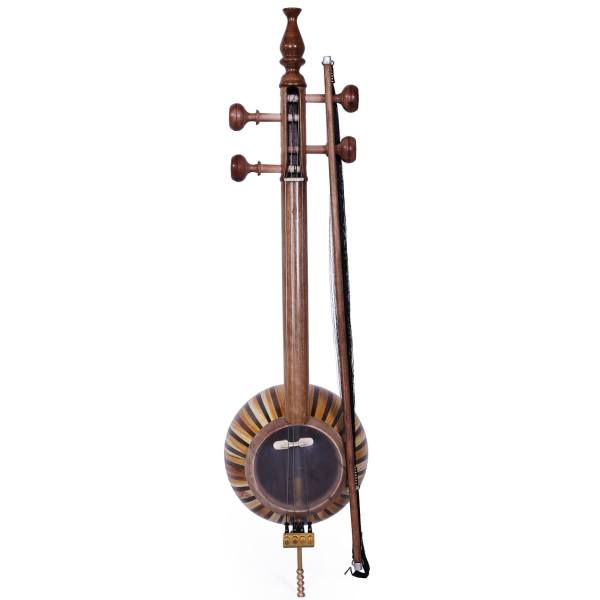
The Tarhu is a modern string instrument that stands out for its innovative design and remarkable versatility. Invented by Australian musician and craftsman Peter Biffin in the 1980s, the Tarhu is a member of the spike fiddle family, but it distinguishes itself through a unique acoustic system and an ability to adapt to a wide range of musical styles. The instrument features a long, slender neck and a small, rounded body, both typically crafted from Blackwood. The Tarhu is played using either a bow or by plucking, and it is equally suited for both techniques. Its design allows for a rich palette of tonal colors and a dynamic range that surpasses many traditional string instruments. The Tarhu’s appearance is striking, with carved wooden elements inspired by Islamic architecture and natural forms such as the shell of a sea urchin, giving it both visual and acoustic elegance.
Type of Instrument: The Tarhu is classified as a string instrument, specifically a spike fiddle. Spike fiddles are a family of bowed string instruments characterized by a neck that passes through the body, with the instrument often resting on a spike or endpin. The Tarhu, however, is more than a mere variant; it is a hybrid instrument that combines features from both Eastern and Western string traditions. It can be played with a bow, like a violin or erhu, but is also designed for plucked techniques, enabling it to perform a vast array of musical genres. The Tarhu’s construction allows for both melodic fluidity along a single string and rapid crossing between multiple strings, making it a truly flexible instrument.
History of the Tarhu
The Tarhu’s history is relatively recent, with its origins traced to the late 20th century. Peter Biffin began experimenting with new string instrument designs in the 1980s, drawing inspiration from a variety of traditional instruments such as the yaylı tambur from Turkey and the erhu from China. His early work involved modifying these instruments to expand their expressive capabilities, such as creating a yaylı tambur with a redesigned body and sympathetic strings, and later, a modified erhu with a fingerboard to make it more accessible for violinists. These experiments culminated in the creation of the Tarhu in the mid-1990s, with the first prototype appearing in 1995. The Tarhu’s development was influenced by musical traditions from both Asia and Europe, but its invention is distinctly Australian. The instrument was designed to bridge the gap between Eastern and Western stringed instruments, offering musicians a tool capable of exploring diverse musical landscapes. Since its inception, the Tarhu has continued to evolve, with new variants such as the Nak Tarhu and Lyra Tarhu emerging through collaborations with musicians from different backgrounds. The Tarhu’s history, therefore, is a testament to cross-cultural innovation and the ongoing search for new sonic possibilities.
Construction and Physical Structure
The Tarhu’s construction is a blend of traditional craftsmanship and modern acoustic engineering. Its most distinctive feature is the use of a featherweight wooden cone suspended within the body, which acts as the primary resonator. This cone system is highly efficient at transferring string vibrations, resulting in an instrument that is both responsive and capable of producing a wide range of tonal colors. The body of the Tarhu is typically carved from Blackwood, chosen for its acoustic properties and durability. The shape of the body varies among different Tarhu models, but it is generally small and rounded, sometimes semi-spherical, to maximize resonance while maintaining a lightweight structure. The neck is long and slender, allowing for extensive melodic exploration along each string. The standard Tarhu features four main playing strings, though some variants have more, and a set of sympathetic strings that run beneath or alongside the main strings. These sympathetic strings vibrate in response to the played notes, enriching the instrument’s sound with additional harmonics.
The Tarhu’s bridge design is another innovation, transferring vibrations from the strings to the cone in a manner similar to a sound post in violins, but optimized for the Tarhu’s unique structure. The instrument can be fitted with frets, often made of tied threads, which are adjustable to accommodate different tuning systems. This allows musicians to play in a variety of scales and temperaments, from Western equal temperament to traditional Turkish or Indian systems. The instrument is played with a bow, plectrum, or fingers, and its ergonomic design makes it suitable for both seated and standing performance. The combination of a lightweight body, efficient resonance system, and flexible neck design gives the Tarhu its characteristic sensitivity and dynamic range.
Types of Tarhu
Over the years, several types of Tarhu have been developed, each tailored to specific musical needs and traditions. The main variants include:
Long-Neck Tarhu: The original and most widely recognized version, featuring a long neck (approximately 800mm string length) and four playing strings. It is designed for both bowed and plucked playing styles and can accommodate a wide range of musical genres.
Nak Tarhu: Developed in collaboration with musician Ross Daly, the Nak Tarhu is an evolution of the Lyra Tarhu. It features five playing strings, a larger body, and twelve sympathetic strings. The instrument is named after the Hindi word for fingernail, reflecting its design for left-hand fingernail playing, and is influenced by instruments such as the lyra, gadulka, and sarangi.
Lyra Tarhu: A smaller variant with three playing strings and nine sympathetic strings, inspired by the lyra of Crete and other Eastern Mediterranean instruments. It is particularly suited for traditional and folk music styles.
Short-Neck Tarhu: A more recent development, this version features a neck that is about one-fifth shorter than the original long-neck Tarhu, allowing for faster phrasing and easier balance. It retains the core acoustic features of the Tarhu while offering increased agility for certain playing styles.
Each type of Tarhu offers different string configurations, body sizes, and tuning options, allowing musicians to select the variant that best suits their repertoire and technique.
Characteristics of the Tarhu
The Tarhu is renowned for its sensitivity, dynamic range, and versatility. Its unique cone-based resonance system gives it an unprecedented ability to produce a wide spectrum of tonal colors, from soft and subtle to powerful and resonant. The instrument responds to the slightest changes in bowing or plucking technique, making it highly expressive and suitable for both solo and ensemble performance.
- One of the Tarhu’s most notable characteristics is its adaptability. The long neck and multiple strings allow for both along-the-string melodic playing, as found in instruments like the tanbur and erhu, and across-the-strings techniques, similar to those used in the violin family. This dual capability extends the range of easily accessible notes to nearly four and a half octaves, far exceeding that of most traditional spike fiddles.
- The Tarhu’s construction also enables it to be played in a variety of tuning systems. The use of tied thread frets, which can be moved or removed as needed, allows musicians to experiment with different scales and microtonal intervals. This makes the Tarhu particularly appealing to performers interested in non-Western musical traditions or experimental music.
- The presence of sympathetic strings adds another dimension to the instrument’s sound, creating a rich, resonant background that enhances the main melody. These strings can be tuned to complement the primary scale or mode being used, further expanding the Tarhu’s expressive possibilities.
In terms of playability, the Tarhu is designed to be comfortable for both bowing and plucking. The ergonomic shape and lightweight construction make it easy to handle, while the responsive cone system ensures that even subtle nuances in technique are clearly articulated. The instrument’s appearance, with its intricate carvings and elegant proportions, reflects the same attention to detail found in its acoustic design.
Playing Techniques and Sound Modifications
The tarhu stands out for its remarkable versatility in playing techniques, accommodating both bowed and plucked styles. Its design—featuring a long, slender neck and a unique featherweight wooden cone suspended within the body—allows for an unprecedented range of tone color variations and a large dynamic range. Players can use a bow, various forms of plectra, or fingerstyle, making the tarhu adaptable to a wide spectrum of musical genres from both Eastern and Western traditions. The instrument’s four playing strings facilitate across-the-string techniques akin to those found in the violin family, while the long neck enables along-the-string playing reminiscent of the tanbur and erhu. This dual capability means that up to 2½ octaves can be played on a single string, and the total range extends to nearly 4½ octaves. The tarhu’s bridge and cone system efficiently transfer string vibrations, resulting in a highly sensitive instrument responsive to subtle changes in technique. When played with a bow, the tarhu can produce smooth, flowing legato lines, rapid string crossings, and nuanced dynamic shifts. Plucked techniques reveal a different palette: a small change in the plucking angle can alter the attack from percussive and sharp to mellow and smooth. The tarhu also supports chordal playing, especially when configured with heavier gauge nylon frets, which produce a cleaner sound for plucked chords.
Frets on the tarhu are traditionally tied threads, which can be moved or removed to accommodate various tuning systems, ranging from 12-tone equal temperament to the Turkish system of 27 tones per octave. Some players prefer a fretless setup, especially for bowed playing, as it allows for seamless glissandi and deeper exploration of tone color. The presence or absence of frets significantly affects the instrument’s expressive capabilities, particularly in terms of pitch bending and microtonal ornamentation. The tarhu’s sympathetic strings, running through a channel in the neck, add resonance and depth to the sound, enriching the harmonic content and sustaining overtones. This feature is especially prominent in genres that emphasize drone and resonance, allowing the tarhu to evoke the timbral complexity of instruments like the sarangi or the sitar.
Famous Compositions
While the tarhu is a relatively recent invention, its unique sound has inspired a growing repertoire of original compositions and arrangements. Many of these works are contemporary, blending elements from diverse musical traditions to showcase the instrument’s capabilities. Composers and performers often write pieces that exploit the tarhu’s dynamic range, microtonal possibilities, and ability to shift seamlessly between bowed and plucked passages. Improvisation plays a significant role in tarhu music, with performers drawing on modal frameworks from Turkish, Persian, and other Eastern traditions, as well as Western classical and experimental idioms.
Collaborative works are common, with the tarhu featured in ensembles alongside instruments such as the oud, ney, kamancheh, and piano. These compositions often highlight the tarhu’s ability to bridge musical worlds, serving as a conduit for cross-cultural dialogue. Pieces may include extended techniques, such as bowing on the sympathetic strings, percussive tapping on the body, and unconventional tunings to create new sonic landscapes. Although there is not yet a standardized canon of tarhu compositions, the instrument’s growing popularity among contemporary musicians suggests that its repertoire will continue to expand, incorporating influences from jazz, world music, and avant-garde traditions.
Most Influential Players
The tarhu’s inventor, Peter Biffin, remains its most influential figure. As both a luthier and musician, Biffin’s innovations have shaped the instrument’s evolution and performance practice. His collaborations with musicians from various cultural backgrounds have led to the creation of different tarhu models and playing styles. Ross Daly, a renowned multi-instrumentalist and composer, has played a pivotal role in popularizing the tarhu, particularly in the context of modal music. Daly’s performances and recordings have introduced the instrument to audiences worldwide, demonstrating its expressive potential in both solo and ensemble settings. Other notable players include Michalis Cholevas, who has contributed to the development of new tarhu designs and techniques, and Mazdak Ferydooni, an Iranian instrument maker who collaborated with Biffin and Daly to create a shorter-necked version of the tarhu. These musicians have expanded the tarhu’s reach by incorporating it into diverse musical projects, educational initiatives, and cross-cultural collaborations.
As the tarhu community grows, new generations of players continue to experiment with its possibilities, drawing inspiration from both traditional and contemporary sources.
Historical Performances or Concerts
Since its invention in the 1980s, the tarhu has been featured in a variety of performances that highlight its adaptability and appeal. Early demonstrations by Peter Biffin introduced the instrument to luthiers and musicians interested in innovative stringed instruments. As the tarhu gained recognition, it began to appear in concerts devoted to world music, experimental music, and intercultural collaborations. Ross Daly’s ensembles, such as Labyrinth Musical Workshop, have showcased the tarhu in performances that blend Greek, Turkish, Persian, and other modal traditions. These concerts often feature extended improvisations, allowing the tarhu to shine as both a melodic and harmonic instrument. The tarhu has also been presented at music festivals and academic conferences focused on musical innovation and cultural exchange. Its presence in these settings underscores its role as a bridge between musical worlds, capable of engaging audiences with its distinctive sound and expressive range. Recordings and live performances by influential players have contributed to the tarhu’s growing reputation, inspiring composers and performers to explore its potential in new contexts.
Maintenance and Care
Proper maintenance is essential to preserve the tarhu’s unique sound and structural integrity. The instrument’s body, typically crafted from Blackwood, requires regular cleaning and occasional polishing to protect the wood and maintain its resonance. The featherweight wooden cone, a critical component of the tarhu’s acoustic system, should be handled with care to avoid damage. Strings should be inspected regularly for signs of wear and replaced as needed. Because the tarhu often uses cello strings, replacements are readily available, but care must be taken to select appropriate gauges for the desired tuning and tonal quality. Sympathetic strings, which add resonance, should also be checked for proper tension and alignment.
Frets, if present, may need adjustment or replacement, especially if the player wishes to experiment with different tuning systems. Nylon thread frets can be smoothed using a soldering iron to prevent roughness and ensure comfortable playing. The tarhu should be stored in a protective case when not in use, and exposure to extreme temperatures or humidity should be avoided to prevent warping or cracking. Periodic inspections by a qualified luthier are recommended to address any structural issues and ensure the instrument remains in optimal condition.
Interesting Facts and Cultural Significance
The tarhu is a product of cross-cultural innovation, drawing inspiration from instruments such as the yaylı tanbur and erhu, as well as Western stringed instruments like the violin and cello. Its design incorporates elements of Islamic architecture and the natural form of a sea urchin shell, resulting in a visually striking and acoustically sensitive instrument. One of the tarhu’s most distinctive features is its featherweight wooden cone, which acts as an internal soundboard. This innovation allows the tarhu to produce a wide range of tone colors and dynamic contrasts, setting it apart from other long-necked stringed instruments. The tarhu’s ability to accommodate both bowed and plucked techniques makes it a versatile tool for musical exploration. It can evoke the timbres of traditional Eastern instruments while also fitting seamlessly into Western classical and contemporary ensembles.
Culturally, the tarhu embodies the spirit of musical dialogue and experimentation. Its creation and development have involved collaboration between musicians, instrument makers, and composers from diverse backgrounds. This collaborative ethos is reflected in the instrument’s repertoire and performance practice, which emphasize improvisation, adaptation, and the blending of musical traditions. The tarhu’s growing popularity among musicians interested in modal music, world music, and experimental genres speaks to its relevance in a globalized musical landscape. As an instrument that bridges East and West, tradition and innovation, the tarhu continues to inspire new forms of artistic expression and cultural exchange.
FAQ
What type of instrument is the Tarhu and what makes it unique?
The Tarhu is a bowed string instrument blending features of Eastern and Western instruments. It is unique for its sympathetic strings and a floating bridge resting on a membrane, which produces a rich, resonant sound.
Who are the notable players of the Tarhu?
Linsey Pollak, the Australian musician who designed the instrument, is the most prominent player of the Tarhu. It is also used by experimental and world music performers seeking new sound textures.
What are the main materials used in constructing a Tarhu?
The Tarhu is usually constructed from wood, including tonewoods like spruce or maple, with a skin or synthetic membrane under the bridge and metal or nylon strings for a vibrant tonal range.
 Links
References
Other Instrument
Categories