Introduction
MIDI controllers come in many different forms, each designed to provide musicians and producers with a physical interface for controlling electronic instruments and music software. While all MIDI controllers transmit Musical Instrument Digital Interface data, they differ in the type of performance gestures they capture and the workflows they support.
Some controllers are designed for traditional keyboard performance, while others focus on triggering drum samples, adjusting mixing parameters, or providing expressive performance control. These devices are commonly used with software instruments inside Digital Audio Workstations such as Ableton Live, Logic Pro, and FL Studio.
Understanding the main types of MIDI controllers helps producers select the most suitable interface for their music production or performance environment.
Keyboard MIDI Controllers
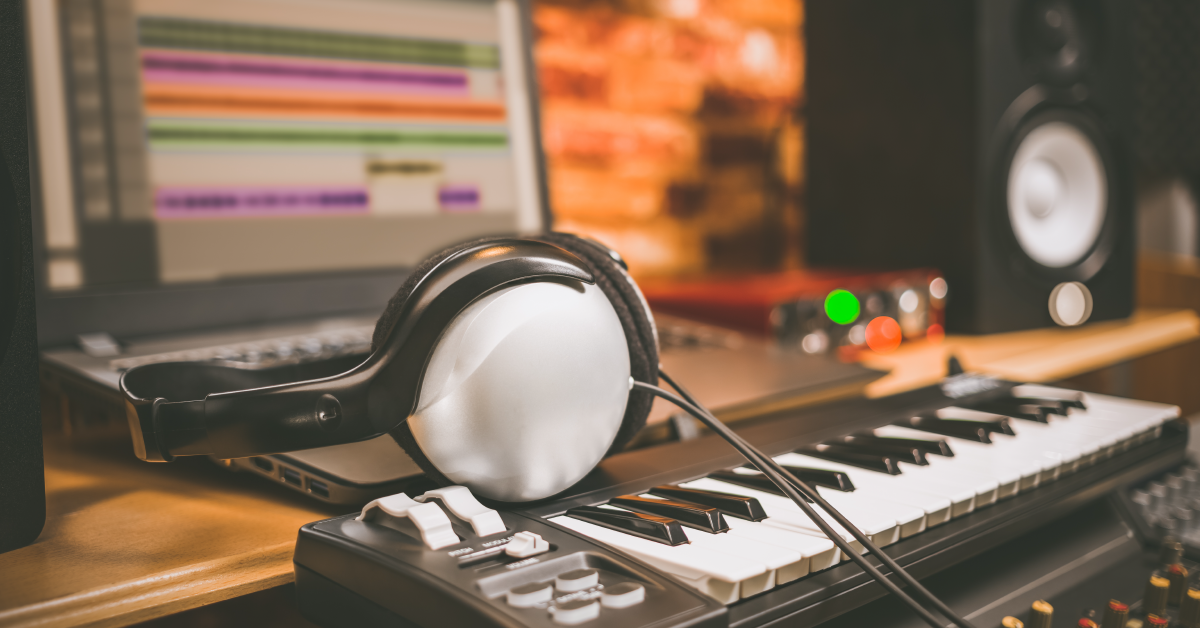
Keyboard controllers are the most common type of MIDI controller. They resemble traditional piano keyboards and allow musicians to play melodies, chords, and harmonic progressions using familiar keyboard techniques.
Most keyboard controllers include additional performance controls such as:
• pitch bend wheels
• modulation wheels
• rotary knobs
• sliders or faders
• assignable buttons
These controllers are widely used in studio production and live performance. Popular examples include the Akai MPK Mini and the Novation Launchkey.
Keyboard controllers are especially useful for controlling synthesizers, virtual instruments, and orchestral sample libraries.
Pad Controllers

Pad controllers feature a grid of velocity-sensitive pads that can trigger samples, drum sounds, or loops. They are widely used in beat production, hip hop, and electronic music.
These controllers allow producers to perform rhythmic patterns and launch audio clips in real time. Many models include backlit pads that change color to indicate different samples or clip states.
A well-known example is the Akai MPC series, which played a major role in the development of hip hop production.
Pad controllers are particularly useful for programming drum patterns and triggering sample-based performances.
Control Surface Controllers

Control surfaces provide physical controls that mirror the functions of a software mixer inside a Digital Audio Workstation.
These devices typically include:
• motorized or manual faders
• rotary knobs
• transport buttons for playback control
• track selection buttons
Control surfaces allow producers and engineers to adjust mixing parameters without using a computer mouse. They are often used in studio mixing environments and professional recording studios.
Some controllers are designed specifically to integrate with particular DAWs, allowing automatic mapping of controls to software functions.
Clip Launch Controllers

Clip launch controllers are designed primarily for triggering loops and audio clips during live electronic music performances.
These controllers typically feature a grid of illuminated pads that represent clips inside a DAW. By pressing a pad, a musician can start or stop a loop or trigger a musical section.
One widely used example is the Novation Launchpad, which is closely integrated with clip-based workflows in electronic music performance environments.
Clip launch controllers are commonly used by DJs, live electronic performers, and producers working with loop-based composition techniques.
Wind MIDI Controllers

Wind controllers are designed to capture performance gestures similar to those used with traditional wind instruments such as saxophones or flutes.
These controllers measure breath pressure, finger positions, and embouchure-like controls to generate MIDI data. This allows wind players to control synthesizers using techniques similar to acoustic wind performance.
An example is the Akai EWI, which is widely used by musicians who want to apply wind performance techniques to electronic sound generation.
Guitar MIDI Controllers

Guitar MIDI controllers translate guitar performance gestures into MIDI data that can control synthesizers and virtual instruments.
These systems typically use specialized pickups or sensors that detect string vibrations and convert them into pitch information.
One example is the Roland GK-3, which allows guitarists to control synthesizers using their instrument.
Guitar controllers enable guitar players to access a wide range of electronic sounds without learning a new instrument interface.
Touch and Expressive Controllers

Expressive MIDI controllers use advanced sensors that capture multiple dimensions of touch and gesture.
These controllers may detect:
• finger pressure
• sideways finger movement
• vertical movement
• strike velocity
Such devices allow performers to control multiple parameters simultaneously, producing highly expressive performances.
A well-known example is the ROLI Seaboard, which uses a soft silicone surface to detect multidimensional finger movements.
Choosing the Right MIDI Controller
The best type of MIDI controller depends on the musician’s workflow and musical style.
Keyboard controllers are ideal for harmonic and melodic performance. Pad controllers are widely used for rhythm programming and sample triggering. Control surfaces are designed for mixing and production workflows, while expressive controllers offer advanced performance possibilities.
Many producers use several types of MIDI controllers together, combining keyboard performance with pad triggering and mixing controls.