
Bipa
Plucked Instruments
Early Medieval (0–1000 CE)
East Asian Traditional Instruments
Video
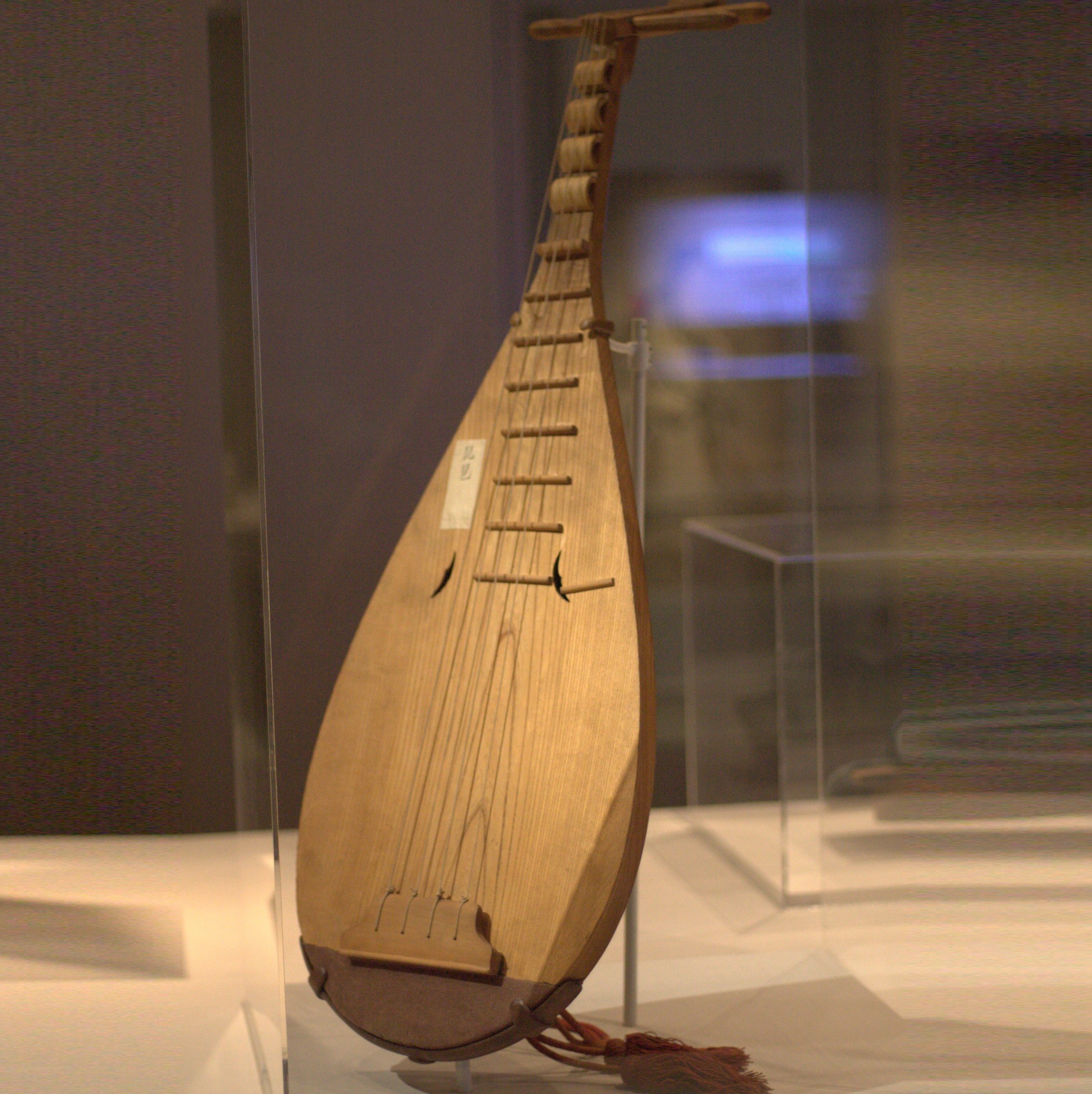
The Bipa is a traditional Korean pear-shaped lute that holds a significant place in Korea’s historical and cultural music traditions. It is a plucked string instrument that closely resembles the Chinese pipa and the Japanese biwa, indicating its origins and evolution through cultural exchanges in East Asia. The instrument features a wooden body with a rounded back and a flat front, with four or five strings stretched over movable frets.
The Bipa is known for its rich tonal quality, offering both sharp and mellow tones, making it suitable for expressive performances in court, folk, and contemporary settings. Although its usage has declined over time, efforts have been made to revive the instrument and incorporate it into modern Korean music. It is a chordophone, a category of musical instruments that produce sound by vibrating strings stretched between two points. It is a plucked lute, meaning it is played by plucking its strings with the fingers or a plectrum. The instrument is often categorized under the broader family of East Asian lutes, which includes similar instruments from China, Japan, and Vietnam. The Bipa can be considered a traditional and historical instrument rather than one commonly found in modern orchestras. In its prime, it was played in both court and folk music, serving as a key instrument in classical Korean compositions.
History
The Bipa has a rich historical background, tracing its roots to the Asian continent, particularly Korea. The instrument is believed to have been introduced to Korea from China during the Three Kingdoms period (4th–7th century CE). The Korean version of the Bipa evolved from the Chinese pipa, which had been brought to China through the Silk Road from Central Asia and India. Over time, the Bipa adapted to Korean musical styles, undergoing modifications in its design and playing techniques. During the Unified Silla (668–935 CE) and Goryeo (918–1392 CE) dynasties, the Bipa became an essential instrument in Korean court music (Jeongak) and folk performances. However, by the late Joseon Dynasty (1392–1897), the instrument gradually fell out of use due to changing musical preferences and the decline of traditional court music. It was eventually replaced by other stringed instruments like the gayageum and geomungo. In the 20th and 21st centuries, there have been efforts to reconstruct and revive the Bipa, leading to its resurgence in traditional Korean music ensembles and fusion performances.
Construction and Design
The Bipa’s construction showcases remarkable craftsmanship and traditional woodworking techniques. It consists of a wooden body, often made from paulownia or hardwood, with a pear-shaped design that provides a resonant sound chamber. The instrument’s body is usually hollow, allowing the sound to amplify naturally. The Bipa features four or five strings made from silk or modern synthetic materials. The strings are attached to tuning pegs located at the top of the instrument’s curved neck. The tuning pegs allow musicians to adjust the tension and pitch of the strings. The front surface of the instrument is flat and contains movable frets, which can be adjusted to alter tonal quality and facilitate different playing techniques. The back of the instrument is curved to enhance resonance.
- The playing technique involves plucking the strings using either the fingers or a plectrum. Traditional players often used a wooden or ivory plectrum, while modern adaptations may incorporate plastic or metal picks. The Bipa produces a warm, expressive sound that varies based on the force and angle of plucking.
Types of Bipa
There are two primary types of Bipa based on historical records and reconstructions:
Hyung-bipa (형비파): This version closely resembles the Chinese pipa and is believed to be the earlier form of the instrument in Korea. It features four strings and was commonly used in court music.
Wol-bipa (월비파): This variation has five strings and is associated with later adaptations of the instrument. The addition of the fifth string allowed for a wider range of tonal possibilities, making it more versatile for performances.
Both types have similar structural components but may differ in size, tuning, and playing techniques. The reconstruction efforts in the modern era have led to the revival of both versions, with contemporary musicians exploring their musical potential in fusion genres.
Characteristics
The Bipa possesses several distinct characteristics that define its musical and cultural significance:
Tonal Quality: The instrument produces a resonant and expressive sound that can be both delicate and powerful. Its timbre is characterized by warm, deep tones that blend well with other traditional Korean instruments.
Tuning and Scale: The Bipa is tuned to pentatonic or heptatonic scales, depending on the musical tradition being followed. The tuning can be adjusted based on the type of performance and ensemble setting.
Playing Techniques: The instrument is played using plucking, strumming, and percussive finger techniques. Players can execute glissandos, vibratos, and rapid note sequences, adding expressiveness to their performances.
Cultural Significance: Historically, the Bipa was an essential instrument in Korean royal courts, Buddhist ceremonies, and folk performances. Although its presence diminished over time, it remains an important symbol of Korea’s musical heritage.
Revival Efforts: Contemporary efforts to revive the Bipa have resulted in modified versions that accommodate modern musical styles while preserving traditional playing techniques. Modern luthiers and musicians are exploring new materials and designs to enhance the instrument’s usability.
Playing Techniques and Sound Modifications
Playing the Bipa requires a combination of plucking, strumming, and bending techniques. Traditional playing techniques include tremolo, slides, and vibrato, which allow for dynamic expression and articulation. The player can modify the sound by altering the plucking force, changing the angle of attack, and using different plectra. Some players also experiment with harmonics and percussive effects to create a more diverse range of sounds. Modern musicians incorporate amplification and digital effects to further expand the instrument’s sonic possibilities.
Applications in Music
The violotta’s unique tonal properties make it a valuable asset in various musical contexts, though its rarity has limited its widespread application.
Chamber Music: In chamber ensembles, the violotta can serve as a bridge between the viola and cello, enriching the harmonic texture and providing a seamless blend of timbres. Its ability to cover both melodic and harmonic roles allows for greater flexibility in ensemble arrangements.
Orchestral Settings: While not commonly found in traditional orchestras, the violotta can be incorporated to add depth to the string section. Composers seeking to expand the orchestral palette may utilize the instrument to introduce new tonal colors.
Solo Repertoire: The distinct voice of the violotta offers solo performers an opportunity to explore repertoire that highlights its rich, mellow sound. While specific compositions for the instrument are scarce, adaptations of works for viola or cello can showcase the violotta’s capabilities.
Contemporary Music: Modern composers interested in exploring unconventional sounds may find the violotta’s unique timbre appealing. Its versatility allows for experimentation with extended techniques and integration into avant-garde compositions.
Despite its limited presence in mainstream music, the violotta holds potential for enriching various musical genres, offering a fresh sonic perspective for composers and performers alike.
Most Influential Players
Given the violotta’s niche status, there are few musicians who have prominently featured the instrument in their performances. However, certain individuals have been instrumental in bringing the violotta to the attention of the musical community.
Felix Draeseke: Although primarily known as a composer, Draeseke’s advocacy for the violotta was significant. His String Quintet in A Major (WoO 25) was specifically composed to include the instrument,
Maintenance and Care
Proper maintenance is essential to preserve the Bipa’s quality and longevity. The instrument should be stored in a controlled environment with stable temperature and humidity to prevent warping and cracking. Regular cleaning of the strings and body helps maintain its appearance and functionality. If the instrument has silk strings, they should be replaced periodically to prevent wear and tear. For wooden components, occasional polishing with a soft cloth and natural oils can help retain the instrument’s aesthetic appeal and durability.
The Bipa holds deep cultural significance in Korea, representing the country’s rich musical heritage. It has been depicted in historical paintings, literature, and folklore, symbolizing refinement and artistic expression. The instrument has also played a role in Korean rituals and court ceremonies, embodying a connection to traditional values and aesthetics. Today, efforts to revive and popularize the Bipa contribute to a broader movement of preserving and celebrating Korea’s intangible cultural assets.
FAQ
What materials are used to construct the Bipa?
The Bipa is traditionally made from wood, often paulownia or pine, for the body. The strings were historically silk but are now sometimes nylon or metal. The bridges and pegs are crafted from hardwood for durability. The soundboard is usually carved to enhance resonance.
What are the types of Bipa?
There are two main types: Hyang-Bipa, which is native to Korea and used in court and folk music, and Dang-Bipa, influenced by Chinese instruments. The Hyang-Bipa has five strings, while the Dang-Bipa usually has four. Both types differ in tuning and playing style.
How is the Bipa played?
The Bipa is played by plucking its strings with fingers or a plectrum. The musician uses both hands to create different tones and vibratos. Techniques include gliding, tremolo, and percussive strikes on the body. It produces a rich, resonant sound suited for traditional and contemporary music.
 Links
References
Other Instrument
Categories



















